Wednesday, November 13, 2013

Bioethanol Lab #4

  
Banana Leaf

Bioethanol Lab

Bioethanol usually is made our of corn, but during this lab, we made the bioethanol out of banana leaves. The process was long, but the overall result was successful. The steps in order to make bioethanol are the following:

Supplies:
- Scissors
- Safety Googles
- One balloon
- Banana Leaf
- Active Dry Yeast
- 1000 mL glass Cylinder
- 500 mL Pyrex Bottle
- White Tape
- Rubberbands
- Hot plate
- Blender
- Stirrer

Procedure:
1. Turn on hot plate to pre-heat
2. Cut leaves into tiny pieces and place them inside of the cylinder
3. Add enough water in the cylinder to completely submerge the leaves
4. Blend the leaves and water until there is a somewhat thin paste
5. Heat the ingredients on the hot plate, bring to a boil
6. Take the cylinder off the hot plate and let the paste cool down
7. Stir in the yeast.
8. Put the thermometer into the plug of the pyrex bottle
9. Put the balloon on the top of the thermometer 
10. Tape down the sides of the balloon to the thermometer in order to secure it
11. Put the ingredients of the cylinder into the pyrex bottle
12. Place the rubber stopper securely onto the bottle, with the thermometer attached
13. Tape down the rubber stopper and make sure the balloon is secure
14. Let the leaf concoction ferment for approximately two days to see the results 

Tuesday, November 5, 2013

Urban Community Gardens

Urban Garden in Brooklyn, NY
http://visualizenashua.com/wp-content/uploads/2011/06/Urban-farm-brooklyn-41.jpg

        The topic of community gardens is a very interesting one, especially since I am an Economics major. However, the purpose of community gardens is to educate people on the environment, cultivate in a community that lacks agriculture and serve the community by providing people will fresh fruits and vegetables. These community gardens are becoming quite popular in the United States, it has been taking place around the world for a while. The nice thing about the community garden is that it is non-profit, therefore anyone can take part in making the community better at a neighborhood level, compared to being neglected and governed by the state. The city of Denver, Colorado has 125 urban gardens in their city alone and they are building more! All gardens are taken care of by volunteers and there is always someone there to make sure that the garden is well taken care of. 
          Urban Gardens are a particular hit, because usually in the city there isn't much agriculture. The gardens provide a new fresh environment compared to major pollution that takes place in these areas. It helps to combat the pollution actually. There is also the fact that many major cities do not provide fresh fruits and vegetables for the inner city, especially the less privileged. This is a chance for the residents in the urban community to understand the importance of vegetation and the positive impact it has on the community. I hope this trend carries on, but as an Economics major, I am afraid that everyone won't uphold their duty to the garden since they technically do not "own" it. My hope is that people understand that taking care of the community is our job and we all own the community. 


Monday, November 4, 2013

Rocks and Soils

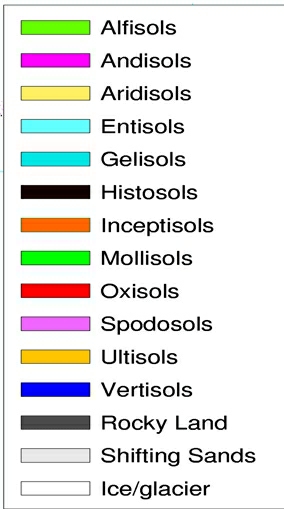
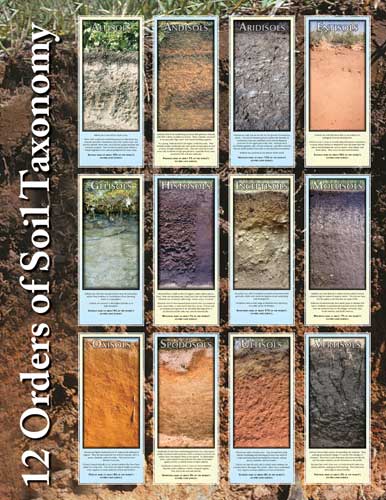
12 Soil Orders of the World

http://www.cals.uidaho.edu/soilorders/orders.htm

Georgia's Soil Type
http://www.ehow.com/list_6665069_types-soil-found-georgia_.html

Georgia's soil is not just comprised of Georgia Red Clay. For one to think that is quite closed minded. However, Georgia is know for it's red clay because  it is so distinctive in comparison to many other types of soil. Red clay is actually called Ultisol and it typically is deprived of nutrients. Since the clay is so dry, it is usually supplemented with manure and soil conditioners to support Georgia's landscape. Kaolin (China Clay) is one of Georgia's largest natural resources. This soil can be used to make paper, auto parts and other items! The demand is getting larger every year. The soil found in the Piedmont region is very rich in organic materials. There is also the Georgia Coastal Plain Soil that is formed with sand and clay marine deposits.

Map of Soil Orders of the World

http://soils.usda.gov/use/worldsoils/mapindex/Global_Soil_Orders_Map.jpg

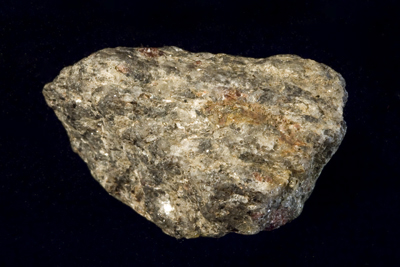
Micaceous Schist


http://www.microscopy-uk.org.uk/mag/artnov08macro/Samuels/


Favorite Place in the World!

My Grandmother's House

This is the place where I grew up, played games with my cousins and learned so much! I also got some of the best Halloween candy ever!

Wednesday, October 30, 2013

Blog Post #5: Tree Walk


Tree Walk
Blog Post # 5

     The environment science class took a tree walk around the entire campus. We began in front of the science and engineering building and made our way to the quad. I never realized how many different types of trees there was on campus! I especially didn't realize that there was so many in such a rather small space! The walk was enticing as we learned about rare trees that the campus had and also trees that were common to Georgia. Throughout our walk, we identified over 20 trees and we had not completely went through all of campus! It was nice to appreciate something that I usually walk by and do not take the time to admire. Some of my favorite trees were:
Azalea
http://upload.wikimedia.org/wikipedia/commons/c/cc/Spring-azalea-flowers_-_West_Virginia_-_ForestWander.jpg
The Azalea's were not in full bloom when we witnessed them, however, this picture shows how they look in the spring. They make the campus look so vibrant alive. They are also classified as shrubs so that makes them that more unique and beautiful.
                                          
Mexican Petunia
Mexican Petunias can stand up to three feet. They can strive in many environments. These flowers are trumpet shaped. The flowers are usually found in Florida. but they can be shipped to many different places.
                                           
 Elephant Ear Plant (Colocasia)
The plant gets its name from its leaves that look like a large ear or even a shield. The plant secretes an irritant that makes human's lips, mouth and throat itch.The plant does not have to grow to its full potential, but it can grow up to 59 in!
Bradford Pear (Pyrus Calleryana)
Originating from China and Vietnam, this plant is very beautiful and unique. It can growth from 15-20 m. These trees have slim trunks, but a very wide blossom. No matter how beautiful the trees are, the flowers have a very distinct, unwelcoming smell which takes away some of the incentive to plant them. 


Tuesday, October 1, 2013

Blog # 3 Ocmulgee Heritage Trail


Ocmulgee Heritage Trail and Greenway
Transect Lines and Measurements
The Ocmulgee Heritage Trail is one that has transformed the way the citizens of Macon look at this water system. The fact that people are gaining more respect for the river, means people are more cautious of how they treat the water which is a benefit to everyone.

http://www.newtownmacon.com/projects/ocmulgee-heritage-trail/
http://www.maconga.org/listings/index.cfm?action=display&listingID=3990&menuID=27&hit=1


Sunday, September 29, 2013

Blog #1: Contour Lines

 Contour Lines

Blue:         1000 ft
Red:          2000 ft
Baby Blue: 3000 ft
Yellow:      4000 ft
Orange:      5000 ft